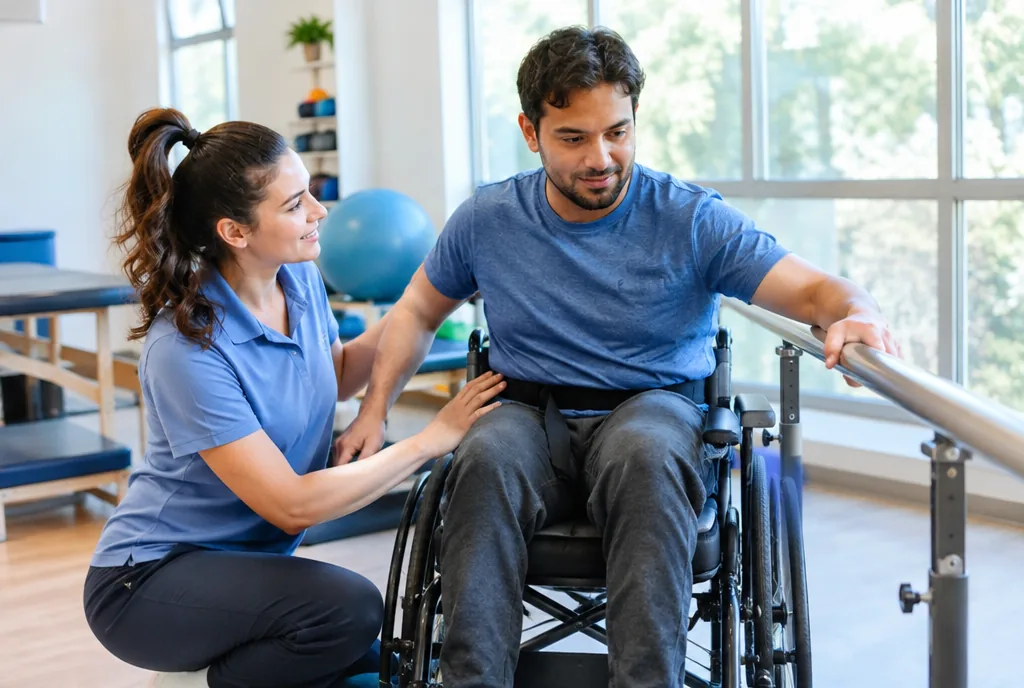
A rehabilitation hospital is neither a nursing home nor an acute care hospital. Its job is to take a patient who has survived a stroke, a spinal cord injury, a brain injury, an amputation, major orthopedic surgery or a long illness, and restore as much function and independence as possible. Care is organized in levels, from intensive inpatient rehabilitation to day rehab, outpatient therapy and home visits, that follow the patient home. This guide explains each level, who qualifies and what families can expect.
What a Rehabilitation Hospital Is
In Medicare terms, a rehabilitation hospital is an inpatient rehabilitation facility (IRF). Some are freestanding hospitals; others are units inside general hospitals. Patients usually arrive directly from an acute hospital once their condition is stable. The difference from a regular hospital ward is the focus: the main treatment is several hours of daily therapy, with a physician specialized in rehabilitation, the physiatrist, managing the medical side.
Inpatient Rehabilitation
Who Qualifies
For Medicare to cover an IRF stay, and most private insurers use similar rules, the patient must:
- need active, ongoing therapy in at least two disciplines, one of which is physical or occupational therapy;
- be able to take part in intensive therapy, generally three hours a day at least five days a week, or in some cases 15 hours over seven consecutive days;
- need supervision by a rehabilitation physician, who sees the patient face to face at least three days a week;
- be expected to make measurable improvement within a reasonable time.
The whole team reviews each patient’s progress at least once a week in an interdisciplinary conference, and the plan and expected discharge date are adjusted there.
A Typical Day
Days are structured, and patients wear their own clothes rather than hospital gowns. Therapy sessions usually last 45 to 90 minutes and are spread across the day so that patients can rest in between. A sample schedule:
| Time | Activity |
|---|---|
| 7:00–8:30 a.m. | Washing and dressing with nursing or occupational therapy support, breakfast |
| 9:00–10:00 a.m. | Physical therapy: transfers, balance, walking or wheelchair skills |
| 10:30–11:30 a.m. | Speech-language therapy or occupational therapy |
| 12:00–1:00 p.m. | Lunch, often in a dining room, which doubles as swallowing and self-feeding practice |
| 1:30–3:00 p.m. | Second physical or occupational therapy session |
| 3:00–5:00 p.m. | Rest, family visits, physician rounds, family training |
| Evening | Dinner, medications, bladder and skin care, sleep |
The Three Core Therapies
- Physical therapy: mobility, strength, balance, walking and wheelchair skills.
- Occupational therapy: dressing, bathing, toileting, cooking, use of the hands and safety at home.
- Speech-language therapy: speech, language, swallowing, memory and problem solving.
The physiatrist manages pain, spasticity, blood pressure, bladder and bowel problems and medications, and watches for complications such as blood clots and infections.
How Long Patients Stay
Medicare patients stay in an IRF for about two weeks on average. Stays after spinal cord injury or severe brain injury are often considerably longer. The goal of the stay is discharge home, and most IRF patients do return home rather than going to a nursing facility.
Inpatient Rehab vs. Other Settings
| Setting | Therapy intensity | Physician oversight | Typical patient |
|---|---|---|---|
| Inpatient rehabilitation facility | High: about three hours a day, at least five days a week | Rehabilitation physician, face-to-face visits at least three days a week | Can tolerate intensive therapy after stroke, brain or spinal cord injury, amputation, major surgery |
| Skilled nursing facility (subacute rehab) | Lower: fewer therapy hours over a longer stay | Physician visits less frequent | Needs rehabilitation and nursing but cannot yet manage intensive therapy |
| Long-term acute care hospital | Therapy secondary to medical treatment | Hospital-level medical care | Still needs complex medical treatment for weeks, for example ventilator weaning |
Day Rehabilitation
Day rehab, sometimes called a day hospital, bridges the hospital and home. The patient sleeps at home but comes in for several hours of coordinated therapy on several days a week, with the same kind of team as on the inpatient unit. Programs often help arrange transportation. Day rehab suits people who are medically stable and have support at home but still need daily, coordinated treatment.
Outpatient Therapy
Outpatient visits, usually one to three times a week for weeks or months, target specific goals: driving again, returning to work or sport, or managing spasticity, pain or balance problems. Medicare Part B covers medically necessary outpatient therapy. There is no longer a hard annual cap, but above a yearly spending threshold the therapist must confirm that further therapy is medically necessary.
Specialized Outpatient Programs
- Cardiac rehabilitation after a heart attack or heart surgery, or for stable heart failure: supervised exercise and education; Medicare covers up to 36 sessions.
- Pulmonary rehabilitation for COPD: Medicare covers up to 36 sessions, and more in some cases.
- Cancer rehabilitation for fatigue, weakness and lymphedema. Since January 2024, Medicare has covered compression garments for lymphedema under the Lymphedema Treatment Act.
- Prosthetic and orthotic clinics for fitting and training with artificial limbs and braces.
- Wheelchair seating and assistive technology clinics.
- Driver rehabilitation with a certified driver rehabilitation specialist, who tests driving skills and recommends vehicle adaptations such as hand controls.
- Vestibular clinics for dizziness and balance problems.
Home Health
When a patient cannot yet travel to therapy, therapists and nurses can visit the home. Under Medicare, home health is covered when the patient is homebound, meaning leaving home takes considerable effort, and needs skilled care. Treatment at home has an advantage: therapists work on the actual stairs, bathroom and kitchen the patient has to manage.
The Rehabilitation Team
- Physiatrist: leads the medical care and the overall plan.
- Rehabilitation nurses: round-the-clock care, bladder and bowel programs, skin care, medication teaching.
- Physical, occupational and speech-language therapists.
- Neuropsychologist: assesses memory and thinking and helps with mood and behavior.
- Social worker or case manager: arranges discharge, equipment, home services and insurance approvals.
- Dietitian: nutrition, texture-modified diets for swallowing problems.
- Prosthetist and orthotist: artificial limbs and braces.
- Peer mentors: people who have lived with the same injury or condition and can answer practical questions.
Preparing to Go Home
Family training is part of the program. Before discharge, relatives learn how to help with transfers, manage medication schedules, check the skin for pressure injuries and support the home exercise program. An occupational therapist may visit the home or review photos and measurements to recommend changes such as grab bars, a shower chair, ramps or moving the bedroom to the ground floor. The case manager orders equipment so that it is in place on the day of discharge.
Life After Discharge
Recovery continues after the last therapy session. Support groups for stroke, brain injury and spinal cord injury survivors and their caregivers, adaptive sports programs, and state vocational rehabilitation agencies, which help with training and returning to work, keep patients connected. In Chicago, the former Rehabilitation Institute of Chicago has operated as the Shirley Ryan AbilityLab since 2017.
Frequently Asked Questions
What is the difference between inpatient rehab and day rehab?
Inpatient patients stay in the facility around the clock with nursing care. Day rehab patients receive a similar amount of therapy but sleep at home.
How long does inpatient rehab last?
About two weeks on average for Medicare patients, often longer after spinal cord or severe brain injuries. The team sets and reviews the expected discharge date each week.
Does Medicare cover outpatient therapy?
Yes, Part B covers medically necessary physical, occupational and speech therapy. Above a yearly threshold, the therapist must confirm that therapy remains medically necessary.
Can family members attend therapy?
Usually yes, especially in the days before discharge, when family training is scheduled. Policies vary, so ask the team which sessions relatives can join.
This site is an independent reference on rehabilitation medicine and is not affiliated with any hospital.