A pontine stroke is a stroke in the pons, the middle portion of the brain stem. Because this compact area helps regulate breathing, swallowing, eye movements, balance, hearing, facial movement, and the traffic between brain and body, symptoms can be strikingly different from the signs many people expect from a stroke. Sudden weakness, numbness, slurred speech, double vision, trouble swallowing, severe dizziness, or loss of coordination needs emergency evaluation right away.
What a Pontine Stroke Is and Where It Happens
The pons sits between the midbrain above and the medulla oblongata below, with the cerebellum behind it. In an adult, it is about 2.5 centimeters long. Its name means “bridge,” which fits its job: nerve pathways in the pons carry signals from the cerebrum toward the cerebellum and medulla, while ascending pathways carry sensory information toward the thalamus.
In this middle part of the brain stem, a pontine infarct can involve one side or both sides. It may also be medial, lateral, anterior, posterior, or a combination of these areas. The anteromedial and anterolateral regions, supplied by the basilar artery, are affected most often. The basilar artery runs along the front surface of the pons; small paramedian perforating arteries and short circumferential arteries branching from it supply much of the area.
Because of that location, more than strength can be affected. Within the pons are systems involved in sleep, breathing, swallowing, bladder control, hearing, balance, taste, eye movement, facial expression, facial sensation, and posture. Cranial nerves VI, VII, and VIII emerge at the junction of the pons and medulla. A lesion can therefore create a pattern that combines body symptoms with eye, face, hearing, or balance symptoms.
Why a Brain Stem Stroke Can Look Different From a Typical Stroke
Unlike a stroke in the cerebral cortex, a pontine stroke is a brain stem stroke. That distinction matters. Pontine symptoms can occur on both sides of the body, while many familiar stroke presentations are mainly one-sided. Signs often associated with cortical strokes, such as aphasia, visual-spatial neglect, gaze deviation, and visual-field loss, may be absent in pontine and lacunar infarcts because the cortex is not affected.
In the pons, damage may directly involve cranial nerve pathways. Alongside weakness or numbness, someone may have double vision, involuntary eye movements, facial weakness, hearing changes, vertigo, or a swallowing problem. Because some pathways cross while others do not, the mix can be confusing. A symptom on one side of the face can occur with a body symptom on the opposite side.
For many strokes, the NIH Stroke Scale, or NIHSS, is useful but it can underrepresent a pontine infarct. The scale is particularly sensitive to deficits often caused by hemispheric strokes, while a person with serious brain stem symptoms may have a comparatively low score. For sudden double vision, inability to coordinate walking, new swallowing trouble, or abrupt facial and limb symptoms, a low score is not a reason for dismissal.
For example, a cortical stroke may stand out through weakness plus language difficulty or a visual-field loss. A pons stroke may instead present with slurred speech, vertigo, facial weakness, double vision, and unsteadiness while language remains intact. Both patterns are emergencies. These are possible patterns; they cannot show what is causing symptoms in an individual.
What Causes a Pontine Stroke and Why Blood Pressure Matters
For pontine infarction, high blood pressure is the most important and most common risk factor. In one study of pontine-base infarction, 31 of 37 patients, or 83.8%, had hypertension. Over time, hypertension or diabetes can lead to lipohyalinosis in the tiny perforating arteries of the pons. That small-vessel damage can cause chronic ischemia and eventually an infarct.
Small artery disease is among the most common causes of pontine infarction; large artery atherosclerosis and cardiac embolism are less common. In a study of isolated pontine infarcts, basilar artery branch disease accounted for 43%, small artery disease for 34%, and large artery occlusive disease for 21%. These labels describe different vascular mechanisms, not levels of severity a person can judge from symptoms.
| Cause in isolated pontine infarcts | Reported share | What the term describes |
|---|---|---|
| Basilar artery branch disease | 43% | Disease affecting a branch of the basilar artery |
| Small artery disease | 34% | Damage involving small penetrating arteries |
| Large artery occlusive disease | 21% | Occlusive disease in a larger supplying artery |
A pontine hemorrhage is bleeding in the pons rather than an infarct from interrupted blood flow. It accounts for about 10% of intracerebral hemorrhages and is usually related to hypertension. The distinction between infarct and hemorrhage requires medical assessment; no symptom list can make that distinction reliably at home.
Another warning pattern, known as pontine warning syndrome, consists of recurrent, stereotyped episodes of motor or sensory deficits, dysarthria, or ophthalmoplegia that can precede a pontine infarct. Even if they pass, repeated episodes are not a reason to wait. Sudden neurologic symptoms need emergency help, whether they are new, recurring, or improving.
Pontine Stroke Symptoms Change With the Injury Site
Pontine stroke symptoms depend on which networks are injured. Among the possible symptoms are one-sided body weakness, facial weakness, numbness, slurred speech, swallowing difficulty, loss of coordination, vertigo, and hearing loss. For the eyes, symptoms can include double vision from abducens palsy, nystagmus, inability to move both eyes together in a direction, and trouble blinking. Pseudobulbar affect, meaning uncontrolled crying or laughing, can also occur.
Medial, lateral, and caudal patterns
A medial pontine infarct, closer to the center of the pons, typically causes weakness on one side of the body, paralysis of eye muscles, and a horizontal gaze palsy. A lateral pontine infarct, farther to the side, typically causes loss of sensation on the opposite side of the body and ataxia. A caudal, or lower, pontine infarct typically causes facial weakness, hearing loss, and vertigo. These are patterns, not a do-it-yourself map: a lesion can extend across regions and create overlapping signs.
| Injury pattern | Typical findings |
|---|---|
| Medial pontine infarct | One-sided body weakness, eye-muscle paralysis, horizontal gaze palsy |
| Lateral pontine infarct | Opposite-side body sensory loss and ataxia |
| Caudal pontine infarct | Facial weakness, hearing loss, vertigo |
Because the pons participates in breathing and swallowing, symptoms may involve either function. Unless medical personnel instruct you otherwise, do not give food or drink to someone with sudden signs that could involve swallowing. Instead, call emergency services, note when the person was last known well, and follow the dispatcher’s instructions.
Left Pontine Stroke and Right Pontine Stroke Can Produce Crossed Signs
“Left pontine stroke” and “right pontine stroke” describe the side of the pons affected. They do not mean all symptoms will appear on that same side. At different points, long sensory and motor pathways cross, while some cranial nerve findings stay on the side of the lesion. The result can be a crossed pattern involving the face on one side and the body on the other.
In left lateral pontine syndrome, also called Marie-Foix syndrome, the reported pattern includes loss of pain and temperature sensation on the right side of the body, with left facial weakness and left-sided ataxia. In a left medial pontine syndrome, or Foville syndrome, a person may have right-sided hemiparesis and loss of touch and vibration sensation, with a left abducens palsy. An abducens palsy affects outward movement of the eye on the affected side.
Right-sided lesions can create corresponding mirror-image patterns. A dorsal pons lesion affecting long circumferential basilar branches, described in Raymond-Cestan syndrome, can cause same-side ataxia and gaze palsy with opposite-side sensory loss. Ventral pontine injury in Millard-Gubler syndrome can cause same-side facial and abducens palsy with opposite-side hemiparesis. Another pattern, one-and-a-half syndrome, combines a horizontal gaze palsy in one direction with internuclear ophthalmoplegia in the other.
These named syndromes show why the pons deserves careful neurologic assessment. They are not labels to apply from a symptom checklist. In particular, a sudden combination of facial change, weakness, new vision trouble, dizziness, hearing change, or poor coordination should be treated as an emergency.
Recovery After a Pontine Stroke: What the First Months Can Hold
Can a person recover from a pontine stroke? Recovery is possible, but it varies with the cause, size, and location of the injury and with the problems that follow it. Most survivors of pontine infarction achieve the largest share of their functional recovery in the first three months. That is a useful timeframe for planning and reassessment, not a promise or a deadline for any one person.
Early changes deserve close attention. Early neurologic deterioration is defined as an increase of at least two NIHSS points during the first week. In isolated pontine infarction, diabetes and a larger infarct area are the strongest predictors. Basilar artery branch disease has been associated with the highest rate of early neurologic deterioration; in one study, it accounted for 46.9% of early-deterioration cases.
Across isolated pontine infarcts, long-term survival is generally good, although early outcomes can differ by cause. For that reason, the first week and the following months serve different purposes: close attention to changing neurologic function first, then practical work toward the abilities that matter most to the individual. Neither a rapid early gain nor a difficult early course defines every later step.
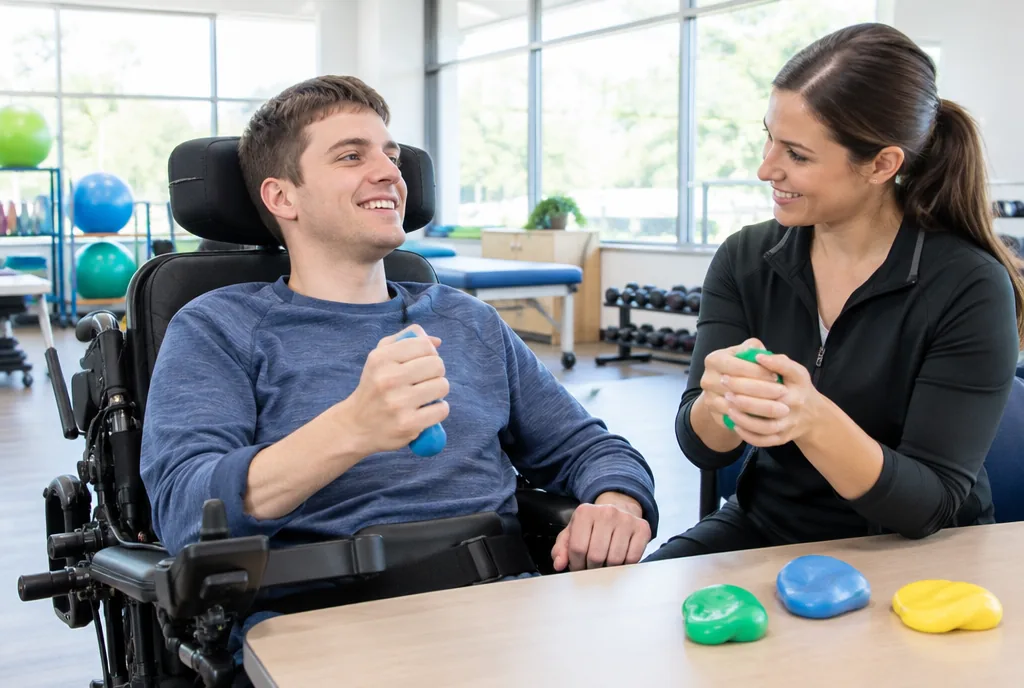
Rehabilitation planning needs to match the person’s actual difficulties. For one person, the immediate issue may be coordination and walking; for another, communication, eye movement, facial weakness, or swallowing may be more prominent. Clear communication between the person, family, and care team is especially important when speech or movement is limited. Goals can be reviewed as function changes rather than assumed from the initial symptoms alone.
Long-term outcomes also differ by stroke mechanism. In a study with a mean follow-up of 46 months, five-year mortality for isolated pontine infarcts was 20.6% for small artery disease, 14% for basilar artery branch disease, and 23.8% for large artery occlusive disease. Reported five-year recurrence was 29.4% for small artery disease, 14.3% for large artery occlusive disease, and 2.3% for basilar artery branch disease. Those group findings cannot predict an individual outcome, but they underscore why follow-up and risk-factor management matter.
When a Lacunar Infarct or Locked-In Syndrome Is Involved
A lacunar infarct is a small, deep infarct. Lacunar infarcts make up about 25% of ischemic strokes, and the pons is the affected location in 16% of them. Pontine lacunar infarcts are, by definition, less than 15 millimeters in diameter and are deep in the pons rather than on its ventral surface. Pure motor hemiparesis is the most common lacunar syndrome; pure sensory stroke, ataxic hemiparesis, and sensorimotor stroke also occur.
Small does not automatically mean minor. A small lesion in the pons can still interrupt a densely packed pathway with meaningful effects on movement, sensation, speech, or coordination. Likewise, a low NIHSS does not reliably capture every serious brain stem deficit.
Locked-in syndrome is a severe but distinct condition that typically follows a bilateral ventral pontine infarct interrupting corticospinal and corticobulbar pathways. A person may be fully conscious and cognitively intact but unable to speak or move. Communication may occur through vertical eye movements and blinking. That preserved awareness is central: locked-in syndrome is not the same as unconsciousness.
In one study, 23 of 43 people emerged from the locked-in state, usually within two years of the event; three achieved complete motor recovery. The same evidence reports high long-term care dependence in 88% of survivors. These figures communicate both possibility and seriousness. Reliable communication access and individualized care planning are essential when movement and speech are severely limited.
Four Common Misunderstandings About Pontine Stroke
- “A low NIHSS means it is not serious.” Pontine infarcts can cause severe symptoms despite low NIHSS scores because the scale may miss important brain stem deficits.
- “A lacunar infarct is automatically minor.” A pontine lacune is small by definition, but its location can still affect critical pathways.
- “Locked-in syndrome means the person is unconscious.” People with locked-in syndrome can be awake and cognitively intact even when they cannot speak or move.
- “Stroke warnings can wait to see if they fade.” Recurrent or sudden neurologic symptoms, including pontine warning patterns, need emergency evaluation.
Frequently Asked Questions
Can a person recover from a pontine stroke?
Yes, recovery is possible. Most survivors of pontine infarction reach the largest share of their functional recovery in the first three months, but the degree and pace of recovery vary widely.
What is the most common cause of pontine stroke?
High blood pressure is the leading and most important risk factor. Small artery disease is a common cause; among isolated pontine infarcts, basilar artery branch disease was the most frequent cause in one study.
What are the symptoms of a pontine stroke?
Possible symptoms include weakness, facial weakness, numbness, slurred speech, swallowing difficulty, ataxia, vertigo, hearing loss, double vision, nystagmus, and gaze problems. Sudden symptoms require emergency care.
How is a pontine stroke different from a typical stroke?
It affects the pons in the brain stem and can cause bilateral or crossed symptoms along with cranial nerve findings. Cortical signs such as aphasia or neglect may be absent, and NIHSS scores may underestimate severity.
Where is a pontine stroke located?
It is located in the pons, the middle segment of the brain stem between the midbrain and medulla oblongata and in front of the cerebellum.