The Rehabilitation Institute of Chicago (RIC) was founded in 1954 and grew into the best-known rehabilitation hospital in the United States. Since 2017 it has operated as the Shirley Ryan AbilityLab, in a new building in downtown Chicago. This article traces its history, its research and what its long run at the top of the national rankings does and does not tell patients.
Origins: Paul Magnuson and the Warehouse on Ohio Street
RIC was founded by Dr. Paul B. Magnuson, an orthopedic surgeon who had served as medical director of the Veterans Administration after World War II. There he saw thousands of young men return with amputations, spinal cord injuries and brain injuries, and he concluded that saving their lives was not enough without organized care to restore function and independence. In 1954 he opened the institute in a renovated warehouse on Ohio Street, just north of the Chicago River.
At the time, physical medicine and rehabilitation was a young specialty. Many hospitals treated the acute injury and then discharged patients to their families or to long-term institutions. Magnuson’s institute brought physicians, therapists and nurses together in one place with the stated goal of returning patients to home and work.
The Betts Era and the Streeterville Hospital
Dr. Henry B. Betts joined RIC in 1963 and led it for decades, first as medical director and later as its chief executive. Under Betts the institute built its flagship hospital on East Superior Street in the Streeterville neighborhood, which opened in 1974, and expanded its research and training programs. Betts was also a public advocate for the civil rights of people with disabilities, arguing that access to buildings, transportation and jobs mattered as much as treatment.
Teaching and Research
Training Physiatrists and Therapists
RIC served as the rehabilitation partner of Northwestern University’s Feinberg School of Medicine. Its residency program trained physiatrists, physicians specializing in physical medicine and rehabilitation, and it provided clinical training for physical, occupational and speech-language therapists and rehabilitation nurses. Many of its graduates went on to lead rehabilitation programs elsewhere.
Targeted Muscle Reinnervation and the Bionic Arm
RIC’s best-known research result came from its Center for Bionic Medicine, led by Dr. Todd Kuiken. His team developed targeted muscle reinnervation (TMR), a surgical technique that reroutes the nerves that once served an amputated arm to other muscles, for example in the chest. When the patient thinks about moving the missing hand, those muscles contract, and sensors pick up the signals to control a powered prosthetic arm. The first patient, Jesse Sullivan, a power line worker who had lost both arms, was fitted in 2002 and became known in the press as the “bionic man”. TMR is now performed at many centers, and surgeons also use it to reduce nerve pain after amputation.
Conditions Treated
RIC and its successor treat adults and children with a wide range of conditions, organized in specialized programs:
- Stroke: relearning movement, speech, swallowing and daily activities after a stroke.
- Brain injury: rehabilitation after traumatic brain injury and after injuries from lack of oxygen, tumors or infections.
- Spinal cord injury: mobility, bladder and bowel management, skin care and equipment after a spinal cord injury.
- Amputation and limb loss: prosthetic fitting and training, including TMR.
- Cancer rehabilitation: managing weakness, fatigue and lymphedema during and after treatment.
- Pediatric rehabilitation: care for children with cerebral palsy, brain and spinal injuries and other conditions.
- Neuromuscular diseases: conditions such as ALS, multiple sclerosis and muscular dystrophy.
- Musculoskeletal and sports injuries, arthritis: outpatient therapy for joints, muscles and bones.
From RIC to Shirley Ryan AbilityLab
The New Building on East Erie Street
In March 2017 RIC moved from its 182-bed hospital on East Superior Street into a new 1.2-million-square-foot building at 355 East Erie Street with 242 licensed beds, and began operating as the Shirley Ryan AbilityLab. The name honors Shirley Welsh Ryan, a Chicago philanthropist and advocate for children with disabilities, whose family made a major gift to the project.
The Ability Labs
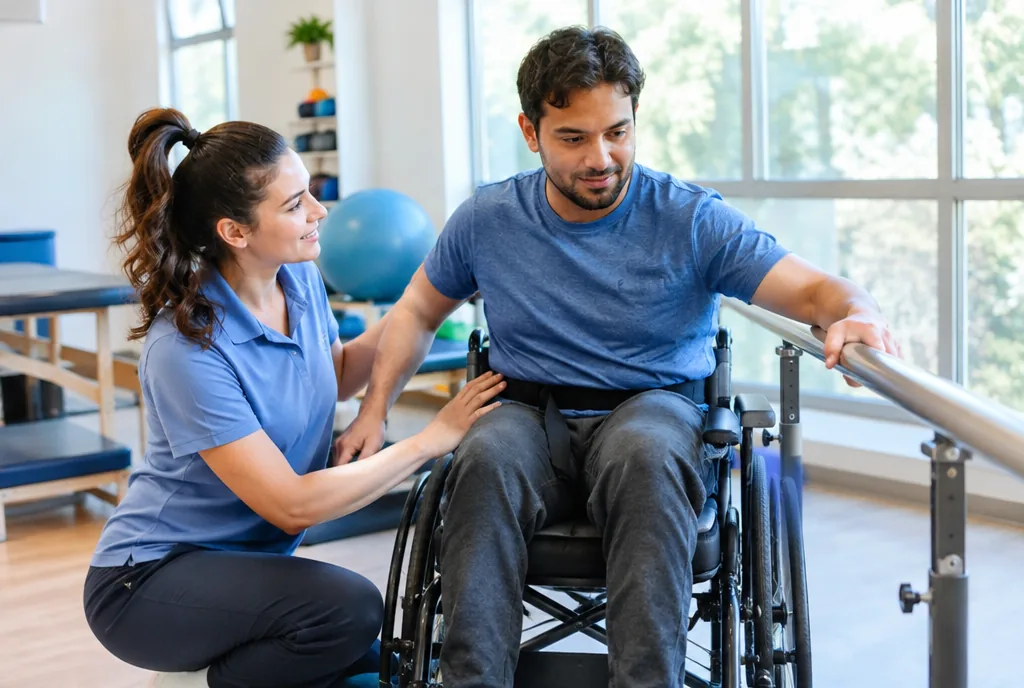
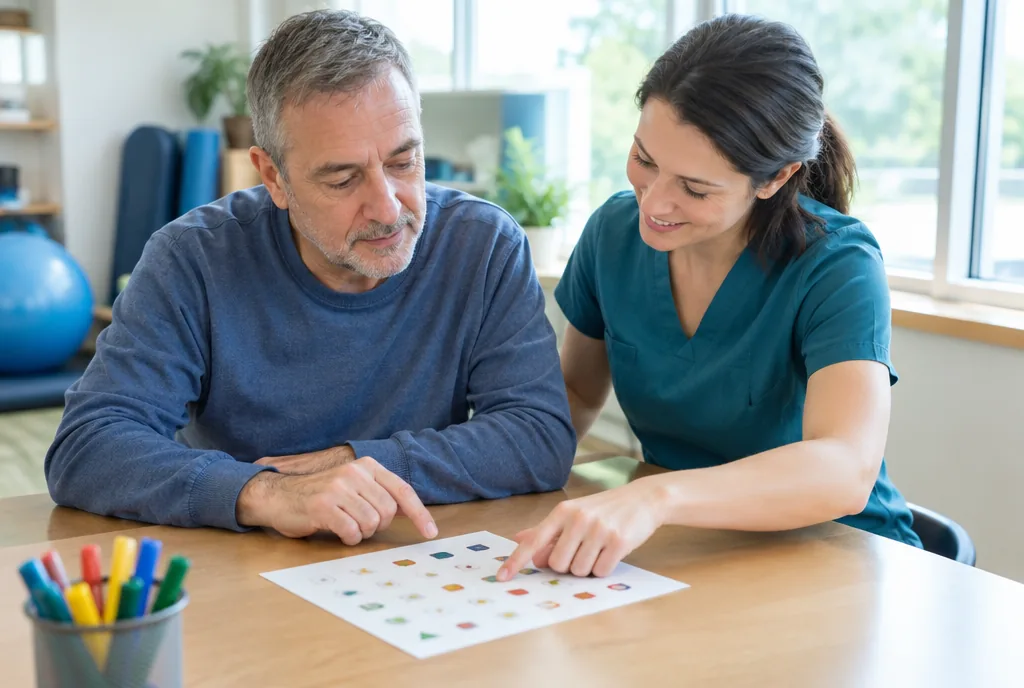
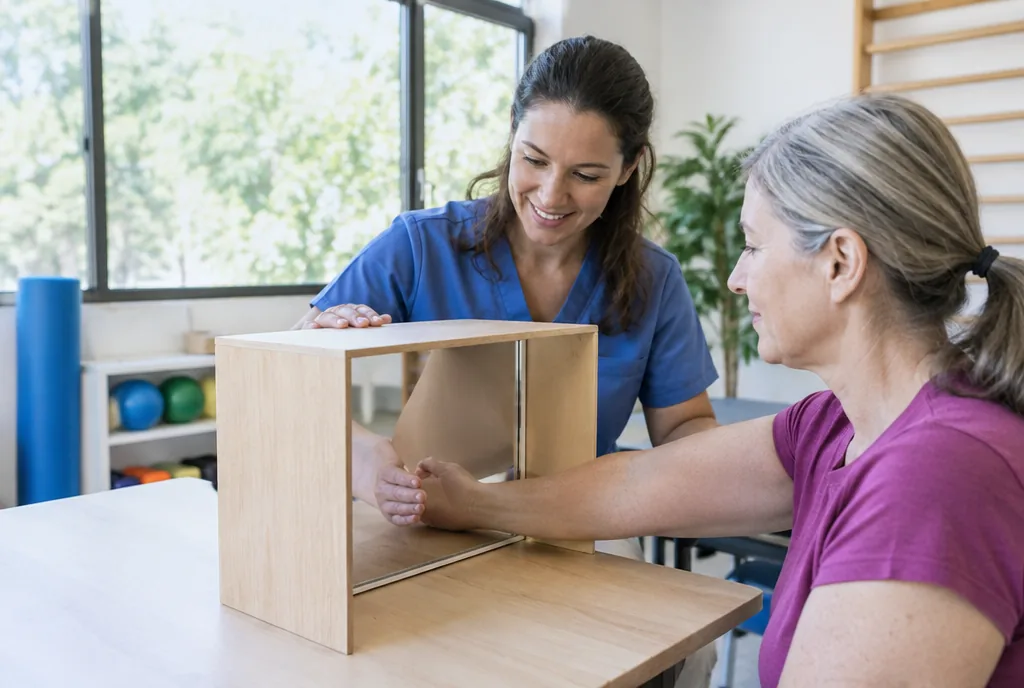
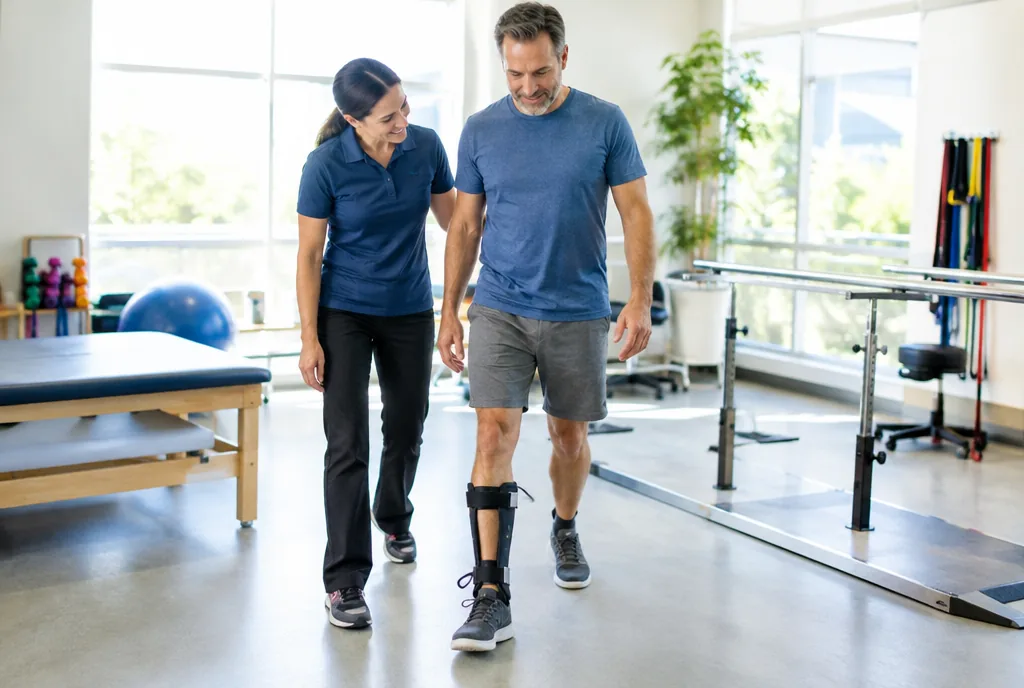
The building was designed as the first “translational” research hospital for rehabilitation: clinicians, scientists, engineers and technologists work on the same floors as the patients rather than in a separate research building. The therapy floors are organized by what patients are trying to regain:
- Think + Speak: cognition, communication and swallowing.
- Legs + Walking: standing, balance and walking, including robotic gait training.
- Arms + Hands: reaching, grasping and fine motor skills.
- Strength + Endurance: fitness for patients weakened by cancer, heart or lung disease or long hospital stays.
- Pediatrics: therapy and research for children and adolescents.
Patients may be invited to join studies while they do their regular therapy. Participation is voluntary.
Rankings and Accreditation
U.S. News & World Report has ranked the institution the No. 1 rehabilitation hospital in the United States every year since 1991. The ranking published in 2026 was its 36th consecutive first place, a streak no other hospital of any kind has matched. The U.S. News rehabilitation ranking is based on surveys of specialist physicians, so it measures reputation among doctors rather than measured outcomes for individual patients.
The hospital has also held The Joint Commission’s Gold Seal of Approval for more than 20 years, has received Magnet designation for nursing five consecutive times since 2000, and was reaccredited by CARF, the rehabilitation accreditation body, in 2025.
The Institution Today
The Shirley Ryan AbilityLab reports caring for more than 50,000 patients in the past year, at its main hospital and at outpatient and day rehabilitation sites in the Chicago area. It has formed partnerships with Henry Ford Health in Detroit and UCSF Health in San Francisco. Its chief executive officer is Dr. Pablo Celnik. The levels of care it offers, from inpatient stays to day rehab and outpatient therapy, are described in our overview of rehabilitation hospital services.
Choosing an Inpatient Rehabilitation Hospital
A national ranking is one input. Families choosing an inpatient rehabilitation facility, often within a few days before hospital discharge, can check the following:
- Does the program specialize in the patient’s condition, for example stroke, spinal cord injury or brain injury?
- Is it an inpatient rehabilitation facility offering at least three hours of therapy a day, five days a week, or a lower-intensity skilled nursing facility?
- Does the patient’s insurance cover the facility, and for how long?
- How far is it from family members, who are usually trained in transfers and home care before discharge?
- What do outcome data show? Medicare’s Care Compare website publishes figures for inpatient rehabilitation facilities, such as discharge to the community and readmissions.
Frequently Asked Questions
Is the Rehabilitation Institute of Chicago still open?
Yes. Since March 2017 it has operated as the Shirley Ryan AbilityLab in a new building a few blocks from the old one.
Where is it located?
At 355 East Erie Street in the Streeterville neighborhood of Chicago, near Northwestern Memorial Hospital and the Magnificent Mile.
Why is it ranked No. 1?
The U.S. News rehabilitation ranking is based on surveys of specialist physicians, who have named the institution the best rehabilitation hospital every year since 1991.
Who founded it?
Dr. Paul B. Magnuson, an orthopedic surgeon and former medical director of the Veterans Administration, in 1954.
This site is an independent reference on rehabilitation medicine and is not affiliated with the Shirley Ryan AbilityLab.