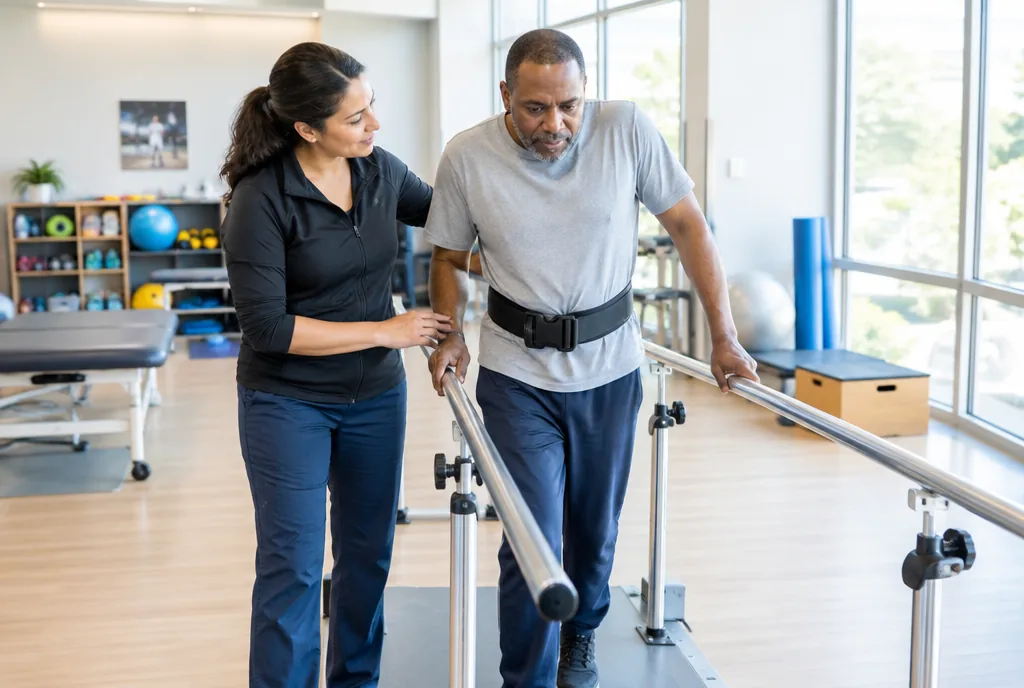
A stroke recovery timeline is best understood as a series of changing windows, not a deadline. Rehabilitation can begin about 24 hours after a stroke once the acute cause has been treated. The fastest changes often occur in the first weeks, recovery commonly slows around three to six months, and some abilities can still improve later. What happens for one person, however, cannot be predicted by a calendar alone: initial severity, the speed of acute treatment, and the type and intensity of rehabilitation all matter.
Stroke warning signs
Sudden weakness on one side, a drooping face, slurred speech or sudden confusion: call 911 right away. Note the time the symptoms started and tell the emergency team.
Stroke recovery stages show where change is most likely
Stroke is a major source of acquired adult disability. In the United States, roughly 800,000 people have a stroke each year—about one every 40 seconds. The timeline matters because each phase brings different decisions: preventing complications in the hospital, building repeated practice in the early months, and reassessing goals when progress slows.
| Recovery period | What the evidence shows | What to watch and discuss |
|---|---|---|
| First days | Rehabilitation may start about 24 hours after the stroke once the acute cause is treated. About 40% of people with acute ischemic stroke have early spontaneous improvement. | Stroke severity, swallowing safety, and the first therapy plan. |
| First weeks to 3 months | The largest motor improvements usually occur in the first weeks. A relative plateau is often seen by three months. | Changes in walking, arm use, communication, and how much help daily tasks require. |
| 3 to 6 months | On average, people regain about 70% of lost function, plus or minus 15%, within three to six months. | Whether therapy dosage and task practice still match the person’s goals. |
| 6 to 12 months | Most people reach a relatively stable state after six months; about 5% show measurable improvement through 12 months. | Small functional gains, new strategies, and persistent symptoms that need care. |
These are group patterns, not promises. A relative plateau means that spontaneous change has slowed; it does not assign a fixed limit to a person’s potential. The phrase “stroke recovery stages” is useful for planning, but it should never replace repeated clinical assessment.
The first days in the hospital establish safety and a baseline
The first imaging test in the emergency department is usually a CT scan. In ischemic stroke, intravenous t-PA or mechanical thrombectomy may be used to restore blood flow as quickly as possible. A perfusion CT can identify some people who may still benefit from mechanical thrombectomy up to 24 hours after symptoms begin.
Clinicians commonly use the 15-item NIH Stroke Scale, or NIHSS, to document severity. It assesses consciousness, gaze, visual fields, facial palsy, motor function, ataxia, sensation, language, dysarthria, and neglect. The number is a baseline for comparing neurological change, not a complete picture of a person’s future independence.
- Early improvement: a fall of at least two NIHSS points within 24 hours is defined as spontaneous improvement. In one dataset, people with this change had a 79% chance of a good outcome at 30 days.
- Swallowing safety: before the first food or drink by mouth, a stroke patient should receive an evidence-based bedside dysphagia screen. Dysphagia affects 28% to 65% of people with acute stroke and raises three-month mortality to 13.6%, compared with 1.6% without it; early screening in stroke units is associated with pneumonia incidence of about 6%.
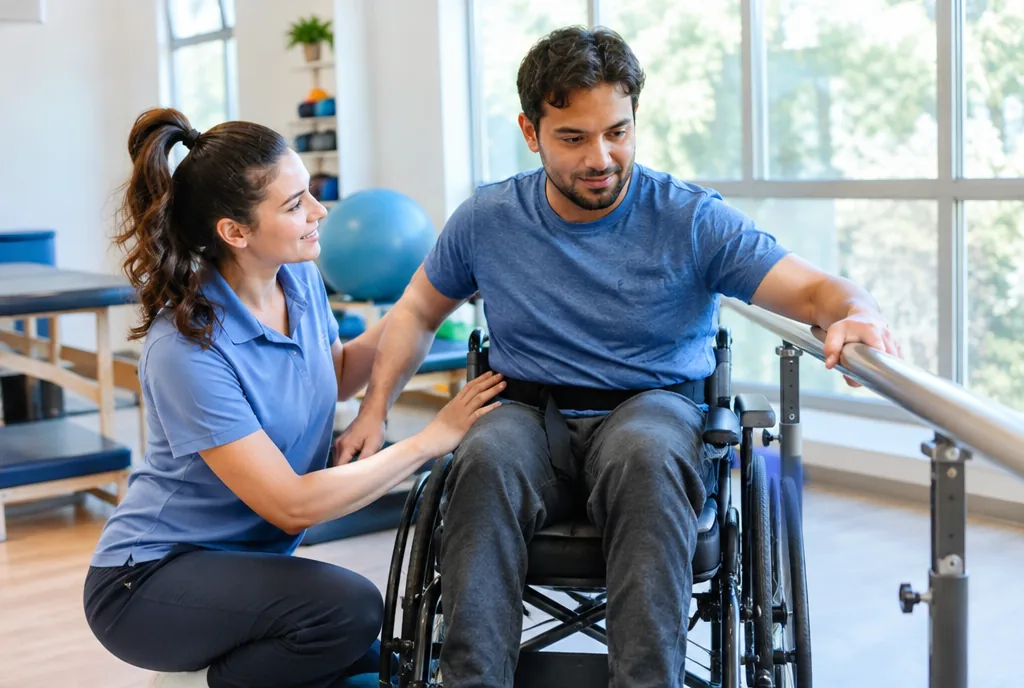
- Rehabilitation planning: at academic centers such as Johns Hopkins, rehabilitation starts about 24 hours after the stroke once the acute cause has been treated, so the first therapy plan usually takes shape during the hospital stay.
An initial NIHSS of 7 or below was associated with a 45% probability of being neurologically normal, defined as NIHSS 0–1, within 48 hours; above 7, that figure was 2.4%. Those sharply different percentages illustrate why the starting point matters, but they do not diagnose an individual prognosis.
The first three months bring the fastest visible gains
For many people, the first weeks are the period of greatest motor improvement. By three months, recovery often reaches a relative plateau. This is also the period when the brain’s heightened response to experience is most pronounced: within hours of a stroke, repair mechanisms can trigger dendritic growth, axonal sprouting, and new synapse formation near the injury.
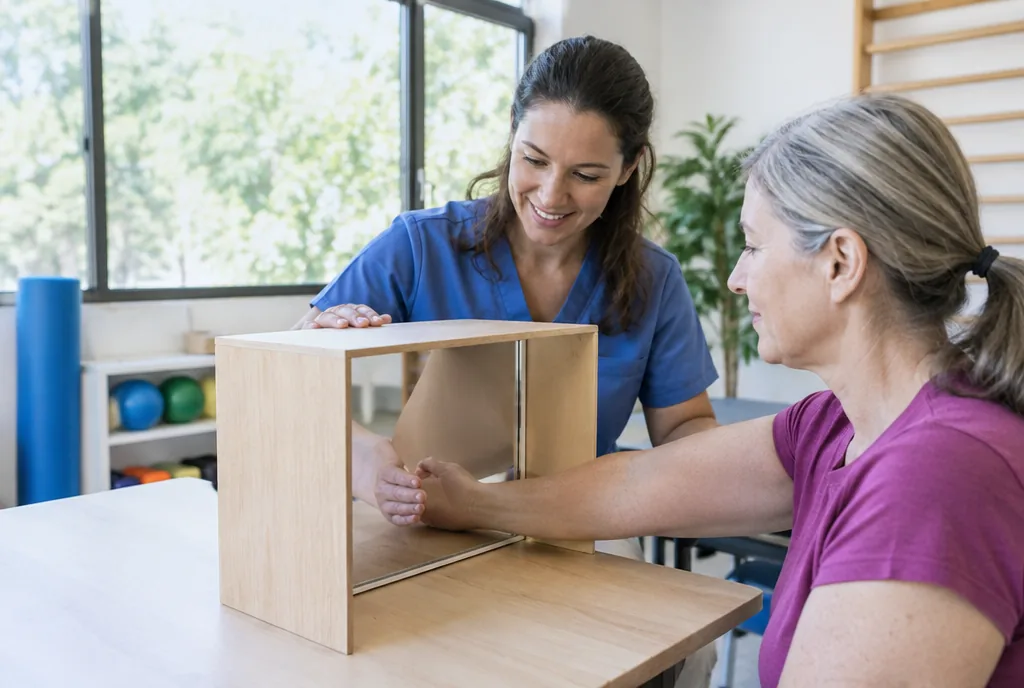
That capacity is called neuroplasticity—the brain’s ability to reorganize neural networks after injury and experience. It is not a guarantee that every ability will return. It is the biological reason repeated, task-specific practice matters during rehabilitation. Approaches identified as supporting neuroplasticity include high-intensity repetitive task training, constraint-induced movement therapy, mirror therapy, robotic rehabilitation, virtual reality, and noninvasive brain stimulation such as rTMS and tDCS.
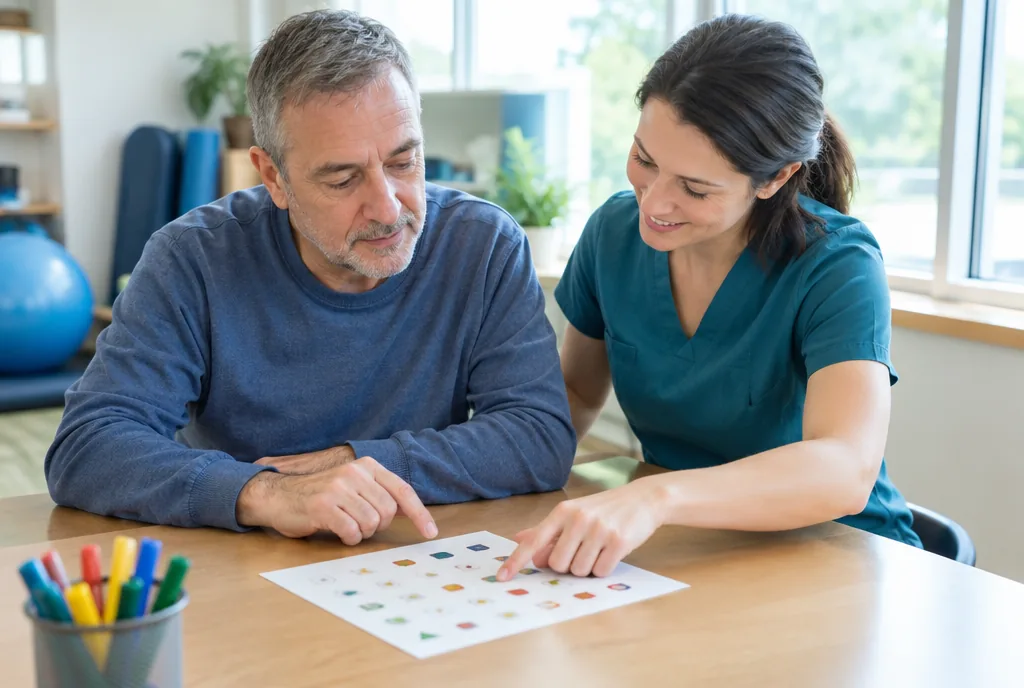
Communication has its own early opportunity. Among people with aphasia, language ability improved most when therapy began within the first month, with a reported 19.1-point gain in overall language ability. Aphasia can also change form: 30% to 60% of people who initially have aphasia shift to another aphasia type during recovery.
A helpful measure is not simply whether movement is visible. The Fugl-Meyer Upper Extremity score, ranging from 0 to 66, is the most widely used validated measure of arm and hand function after stroke. It can document changes that are not obvious in a quick glance.
Hand recovery follows a narrower timeline than overall recovery
Hand recovery is often one of the most urgent questions because a small loss of control can affect eating, dressing, writing, and other daily tasks. Yet it does not follow exactly the same curve as global recovery. Motor control of the arm may plateau by five weeks, while the Fugl-Meyer assessment and the Action Research Arm Test can continue to show improvement through week 14 and beyond.
At three to six months, 55% to 75% of U.S. stroke survivors still have upper-extremity limitations. Four weeks is an important assessment point: when no grip strength is measurable then, the outlook for hand-function return is unfavorable. Conversely, 70% of people with measurable hand motor function at four weeks achieve good or complete hand recovery. Even with severe initial upper-extremity weakness, 9% achieve good hand function.
If complete hand function returns, it usually returns within three months. That statement describes what is most common, not what treatment should be stopped at three months. For selected people, constraint-induced movement therapy addresses “learned non-use”—compensating early with the unaffected arm rather than using the affected side. In the classic protocol, the unaffected arm is restricted for 90% of waking time for 14 days.
From three to six months, therapy shifts from momentum to practice
The proportional-recovery rule describes an average: people regain about 70%, plus or minus 15%, of lost function within three to six months, measured as the difference between normal function and the initial deficit. It is a population average, not a forecast for a particular person.
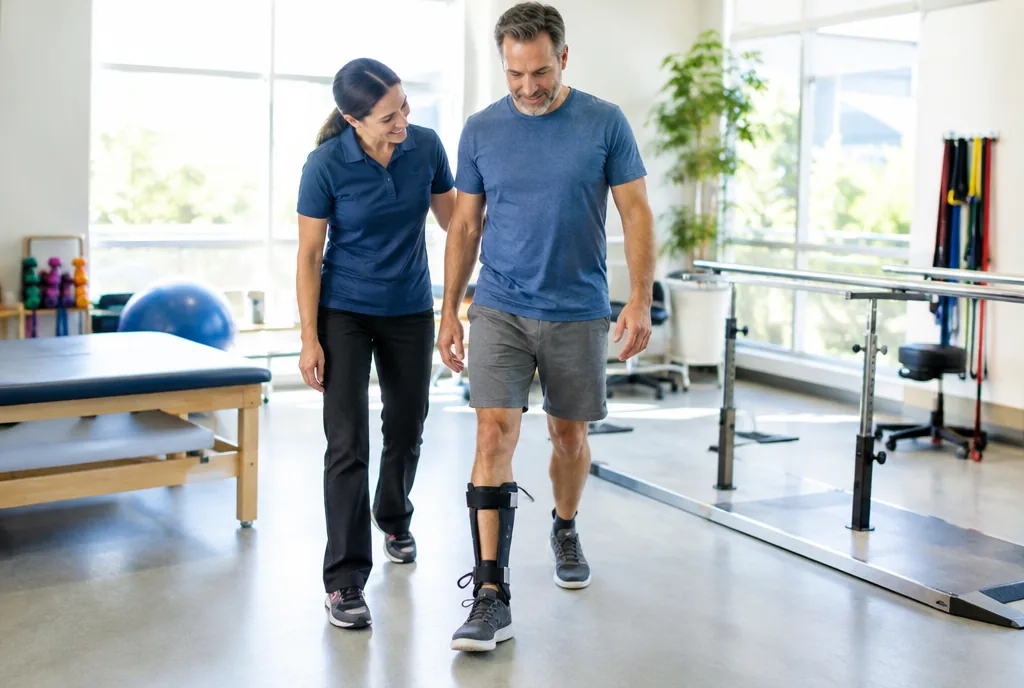
Therapy intensity can be substantial in this window. The 2024 NICE guidance recommends one to two hours of higher-intensity physical therapy per day, five days a week, rather than the earlier practice of less than 45 minutes a day. Modified constraint-induced movement therapy has improved upper-extremity function in people more than two months after stroke when training lasts at least 30 minutes per session for at least two weeks.
Inpatient rehabilitation may no longer be the setting at this point, but the questions remain practical: Which task needs repeated practice? Which measure has changed? What amount of fatigue is limiting participation? For speech therapy, the trend is also meaningful: aphasia prevalence falls from an initial 21% to 38% to 12% to 18% at six months.
A plateau after six months is information, not an ending
After six months, the critical recovery window is considered to close for most people, and spontaneous recovery is generally near its limit. Many people then have a relatively stable chronic deficit. For some, that six-month point represents full recovery; for others, it marks the beginning of learning to live with continuing impairments.
Still, stable does not mean motionless. About 5% of people show measurable improvement through 12 months. In nonfluent aphasia, some people have improved picture naming and sentence length five to 15 years after stroke. A plateau is therefore a reason to re-examine goals and measurements, not proof that all future change is impossible.
Stroke type also affects the early curve. Three-month mortality after intracerebral hemorrhage is 35% to 65%, compared with 15% to 25% after ischemic stroke. Hemorrhagic stroke recovery begins more slowly, but after day seven people with intracerebral hemorrhage show stronger functional gains. Independent of initial severity, intracerebral hemorrhage nearly doubles the odds of a poor neurological outcome (odds ratio 1.94); by five to 10 years, a difference in functional outcome between hemorrhagic and ischemic stroke is no longer detectable.
Fatigue and depression deserve treatment, not blame
Progress on a timetable can be hard to see when fatigue consumes the available energy. The pooled worldwide prevalence of post-stroke fatigue is 46.79%, and up to 40% of survivors call it their worst or one of their worst symptoms. The Fatigue Severity Scale is the most commonly used measure; a score of 4 or higher is its cutoff.
Depression is also common: about one-third of stroke survivors have post-stroke depression at any one time, and up to half experience depression at some point. The likelihood is highest in the first year. Because depression is associated with poorer functional recovery, lower quality of life, higher mortality, and increased risk of recurrent vascular events, it belongs in the recovery conversation. Early treatment of depression improves both physical and cognitive recovery.
New or suddenly worsening stroke symptoms, such as sudden weakness, facial droop, speech trouble, vision loss, or a severe headache, are an emergency: call 911 right away. Do not explain away a sudden neurological change as part of recovery. For gradual concerns such as low mood or persistent fatigue, talk with the treating doctor.
Three beliefs that can make recovery harder to understand
“Recovery stops at three or six months.”
Motor improvement is often fastest in the early weeks, a relative plateau is common by three months, and spontaneous recovery is usually near its limit after six months. None of those statements says that every later change is impossible. The 5% with measurable gains through 12 months and later language improvements in some people show why a plateau is not a universal finish line.
“Any visible hand movement means the hand has recovered.”
Different measures change at different rates. Arm motor control may plateau around five weeks, while standardized arm and hand scores can improve through week 14 and beyond. Grip strength and functional use are more informative than a single visible movement.
“Fatigue is a lack of effort.”
Post-stroke fatigue is common and can persist: 40% of patients still have chronic fatigue two years after stroke, and one-third of survivors report fatigue six years later. It is a symptom to assess, not a character judgment.
Frequently Asked Questions
How long does it take to recover from a stroke?
There is no single recovery length. The greatest motor changes often occur in the first weeks; recovery commonly slows around three months, and most people reach a relatively stable state after six months. Severity, speed of initial treatment, and rehabilitation type and intensity shape the course.
What are good signs of stroke recovery?
An NIHSS improvement of at least two points in the first 24 hours is one early positive sign. In everyday terms, needing less help with a task is also a meaningful milestone. Progress should be assessed by the treating team, especially when symptoms fluctuate.
Can you get back to normal after a stroke?
Some people have full recovery by six months, while others have lasting impairments. Whether someone returns to normal depends chiefly on stroke severity, how quickly initial treatment occurred, and the type and intensity of rehabilitation.
When does stroke recovery plateau?
A relative motor plateau often appears around three months. After six months, spontaneous recovery is generally near its limit and many people are relatively stable. A plateau does not rule out later measurable gains or targeted work on a specific ability.
How long does hand recovery take after a stroke?
When complete hand function returns, it usually does so within three months. At four weeks, measurable hand motor function is a favorable sign: 70% of people with it achieve good or complete hand recovery. Individual outcomes still vary widely.