Hemiparesis is weakness or partial paralysis on one side of the body, and it is the most common physical effect of stroke. It can make a hand less reliable, a leg harder to control, or balance less secure, but it is not the same as complete paralysis. Recovery looks different from person to person. Rehabilitation helps you turn whatever movement is available into safer, more useful daily function. If you notice sudden new weakness on one side of the body, call 911 right away.
Hemiparesis after stroke means one side is weak, not necessarily still
The word hemiparesis describes muscular weakness or partial paralysis limited to one half of the body. “Paresis” means weakness. You may be able to move the affected arm or leg, yet have too little strength, coordination, or precision to use it as you did before. The same side can include the face, arm, hand, leg, and trunk.
After a stroke, hemiparesis is common: more than 80% of people show it in the acute period, and more than 40% have chronic hemiparesis. At two weeks after stroke, 70% to 85% of patients have hemiparesis. Those numbers explain why one-sided weakness is central to stroke rehabilitation, but they do not predict what you will be able to do.
Severity exists on a spectrum. With mild hemiparesis, you may walk independently but struggle to pick up coins, button a shirt, or hold a cup without dropping it. With more substantial weakness, you may need help with standing, transfers, walking, or personal care. The practical question is not only whether movement is present, but how safely and consistently it works in your daily life.
Hemiparesis vs hemiplegia: weakness is different from complete paralysis
Hemiparesis vs hemiplegia is a distinction worth making clearly. Hemiparesis means weakness or partial paralysis of one side. Hemiplegia means complete paralysis of one side. Both may result from the same kind of brain injury, including stroke; the terms describe the degree of motor impairment rather than two unrelated diseases.
| Term | What it means | What it can look like |
|---|---|---|
| Hemiparesis | Weakness or partial paralysis on one side | Movement remains, but strength, control, grasp, walking, or coordination is limited. |
| Hemiplegia | Complete paralysis on one side | Voluntary movement on the affected side is absent. |
In everyday conversation, people sometimes use the terms interchangeably. Clinically, the difference matters because it helps describe current function and plan rehabilitation. Your situation can also change over time: recovery may leave partial weakness after a more severe early impairment, while spasticity can make movement increasingly difficult to use. Whatever term is used, the aim remains the same: maximize function and quality of life.
What is hemiplegia in plain language? It is paralysis affecting one body half. Hemiparesis is the related term for weakness rather than complete loss of movement. Neither word, by itself, explains the cause, the outlook, or your full set of abilities.
Why one side becomes weak and why the side matters
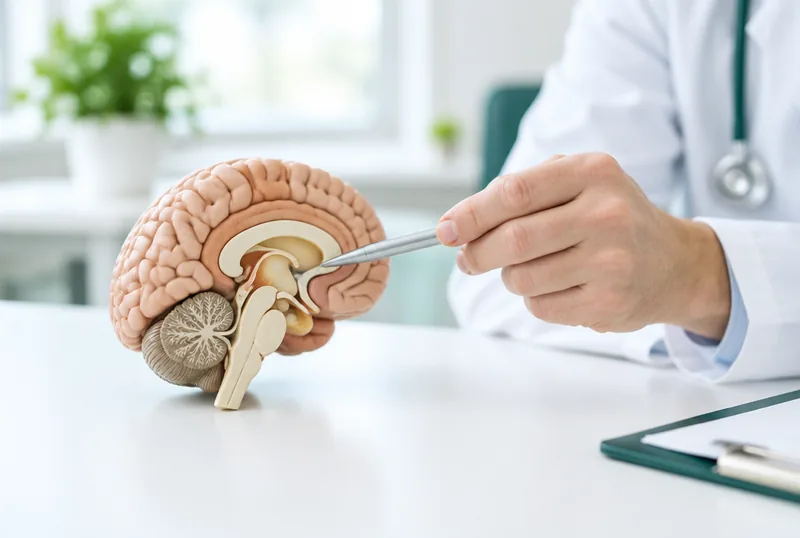
Stroke, whether ischemic or hemorrhagic, is the most common cause of hemiparesis and hemiplegia. The usual pattern comes from the corticospinal tract, a motor pathway. Damage above the medulla oblongata causes contralateral hemiparesis: weakness on the side opposite the brain injury. Damage below the medulla, in the spinal cord or peripheral nerves, can cause ipsilateral hemiparesis on the same side as the lesion.
That crossing pattern explains a common source of confusion. A left-brain injury typically causes right-sided hemiparesis. A right-brain injury typically causes left-sided hemiparesis. “Right hemiparesis” therefore describes weakness on the right body side; after stroke, it commonly follows damage to the left cerebral hemisphere. “Left hemiparesis” describes weakness on the left body side and commonly follows damage to the right hemisphere.
One-sided weakness can also occur with traumatic brain injury, tumors, cerebral palsy, multiple sclerosis, encephalitis, meningitis, and congenital malformations. Do not try to diagnose it yourself from symptoms alone. If weakness begins or worsens suddenly, call 911.
What can accompany left- and right-sided hemiparesis
| Brain injury location | Typical body-side weakness | Common additional change |
|---|---|---|
| Left hemisphere | Right-sided hemiparesis | Aphasia, a speech and language disorder, is common. |
| Right hemisphere | Left-sided hemiparesis | Left-sided neglect, impulsivity, and denial of symptoms are common. |
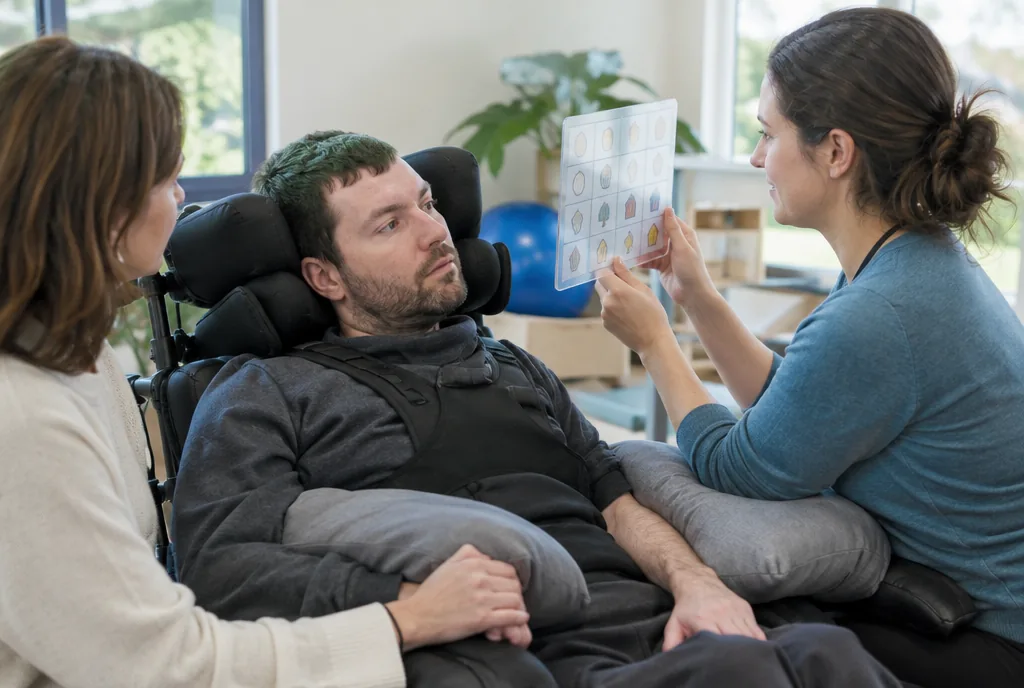
On either side, signs can include loss of balance, difficulty walking, reduced grasp, less accurate movement, muscle weakness, and poor coordination. With left-sided hemiparesis, you or your loved one may not fully notice the left side of the body because of neglect, which adds a different challenge than weakness alone. With right-sided hemiparesis and aphasia, a person may understand more or less than they can easily say, which can change how the therapy team communicates.
Pusher syndrome is another specific problem after acute stroke with hemiparesis. In this condition, the person actively shifts weight toward the hemiparetic side. It was reported in 10.4% of people with acute stroke and hemiparesis. Recognizing the pattern gives rehabilitation staff a concrete postural problem to address rather than treating every balance difficulty as the same.
Recovery has an early surge, but it is not a deadline
Many stroke survivors regain about 70% of their lost motor potential within the first three months. This proportional recovery pattern applies to about 70% of survivors, not to everyone. People with very severe motor impairment often do not follow the rule. It describes a group pattern, not your personal forecast.
Spontaneous motor recovery occurs mainly in the first three to six months after stroke. After six months, further improvement is possible but tends to be slower. At the same time, 90% of stroke survivors have at least one residual deficit. These facts can coexist: meaningful gains are possible, and a residual problem may remain.
Clinicians can measure change rather than relying only on impressions. The Fugl-Meyer Motor Assessment evaluates the quality of movement on the affected side. Early motor evoked potentials from the paretic wrist extensors can also add information: a positive result five days after stroke predicts recovery of about 70% of lost motor potential at 12 weeks. A negative result is not a final verdict. In one cohort, 6 of 11 people initially negative for these potentials later recovered to differing degrees.
A realistic way to use a timeline
Say you can open the affected hand a little in the first weeks but cannot yet use it for dressing. Early therapy may concentrate on repeated, functional movement and safe use in tasks. Progress in the first months may be faster than later on. You and your team can track movement quality with an assessment, adjust goals, and keep working after the early period. Slower progress does not mean no progress.
Physical therapy and occupational therapy build function step by step
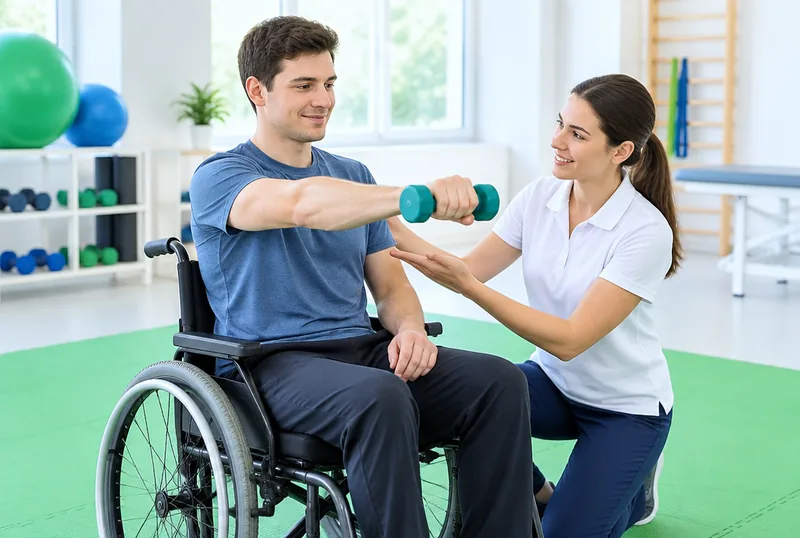
Can hemiparesis be treated? Yes, through rehabilitation. Physical therapists, occupational therapists, and physiatrists work to improve strength and movement on your affected side. Their shared aim is the best possible function and quality of life, not a promise that every lost ability will return.
Physical therapy commonly centers on movement, balance, and walking challenges. Occupational therapy focuses on using the affected side in daily activities, including hand and arm tasks. A physiatrist brings rehabilitation medicine into the plan. This team approach matters because a stronger muscle is only part of recovery; the movement must also become accurate, coordinated, and useful in your routine.
Constraint-induced movement therapy: intensive practice for selected people
Constraint-induced movement therapy, or CIMT, limits use of the unaffected arm for 90% of waking time while the paretic arm is trained for six hours a day over 10 weekdays, or two weeks. A modified form uses two hours of training daily for two weeks and showed significant improvement over conventional therapy on the Wolf Motor Function Test and the Motor Activity Log.
Not everyone is a candidate for the same schedule. Active finger extension is the strongest predictor of a good CIMT result: people who can extend their fingers from a fist tend to benefit most. That concrete movement tells your clinician more than the diagnosis label alone. It also explains why a program that is right for one survivor is not automatically right for you.
Mirror therapy offers a visual route into practice
During mirror therapy, you move the unaffected arm while a mirror creates the visual impression that the affected arm is moving. The method uses that illusion to engage the mirror neuron system. In a meta-analysis of people with subacute stroke, bimanual mirror therapy showed significantly better motor recovery, with a standardized mean difference of 0.473; unilateral mirror therapy did not show a significant effect in that analysis.
The useful takeaway is specific: the form of practice matters. A therapy name is not enough to explain what will happen. You and your therapist still need to decide which movements to practice, how to make them safe, and how the practice connects to an actual activity.
Spasticity and supports can remove barriers to movement
Weakness is not the only barrier after stroke. Spasticity can limit how a limb moves and how easily it can be used in therapy. Intramuscular botulinum toxin A is used to treat spasticity in adults after stroke and in children with cerebral palsy. In one example of combination treatment, botulinum toxin A followed by four weeks of training allowed 4 of 12 people with severe hand paresis to begin CIMT.
Neuromuscular electrical stimulation, or NMES, is used as an adjunct therapy to reduce spasticity. Typical settings use frequencies from 20 to 100 Hz with a symmetric biphasic square waveform. The numbers describe one clinical tool, not a home setting to copy without professional guidance.
Orthoses, often called braces, can make up for missing muscle function and joint instability. Certified orthotists make them individually. A brace may make a position more stable or support a joint while you practice a task, but it does not undo the underlying neurologic injury. Fit, function, and your goals decide how the device is made.
Hemiparesis can also be part of MS or cerebral palsy
Stroke is the most common cause, but hemiparesis is not exclusive to stroke. Multiple sclerosis can cause weakness in the arms and legs. Its symptoms vary with the location and severity of nerve-fiber damage, and hemiparesis can appear as a motor symptom during a relapse or progressive course. The recognized courses include clinically isolated syndrome, relapsing-remitting MS, secondary progressive MS, and primary progressive MS.
Rehabilitation methods used after stroke, including physical therapy, CIMT, mirror therapy, and botulinum toxin for spasticity when appropriate, can also be used for MS-related hemiparesis. The cause and course still matter, so the plan should follow the individual condition rather than assuming every case behaves like stroke.
In cerebral palsy, spastic hemiplegia or hemiparesis affects one side of the body, with the arm more affected than the leg. The involved arm and leg can be shorter and thinner, and that difference can become more noticeable with growth. There is no cure for cerebral palsy, but early intervention, physical therapy, orthoses, medicines such as botulinum toxin, and surgery can improve quality of life.
If your baby is older than six months and reaches with only one hand while the other stays in a fist, talk to your pediatrician. It can be an early sign of hemiparesis. The point is not to assign a diagnosis from one behavior; it is to recognize why early evaluation matters.
Common misunderstandings can get in the way of rehabilitation
Myth: Hemiparesis and hemiplegia are just two names for the same thing
They are related but not identical. Hemiparesis is weakness or partial paralysis; hemiplegia is complete paralysis. Both can come from the same brain injury, so a clear description of current movement is more useful than treating the words as interchangeable.
Myth: A recovery rule predicts an individual outcome
The proportional recovery rule describes a majority pattern, not a guarantee. It applies to about 70% of survivors, and people with severe motor impairment often do not fit it. An early negative motor evoked potential also does not close the door on later recovery.
Myth: One side of the brain means weakness on that same side
Above the medulla oblongata, the usual pattern is the opposite: left-brain injury causes right-sided weakness, and right-brain injury causes left-sided weakness. Spinal cord and peripheral nerve injuries below the medulla can produce same-side weakness instead.
Myth: Rehabilitation is only about making muscles stronger
Strength matters, but hemiparesis can also affect balance, grasp, precision, coordination, posture, and awareness of one side. Therapy works toward movement that functions in real life, while braces or spasticity treatment may address obstacles to that work.
Frequently Asked Questions
What is the difference between hemiplegia and hemiparesis?
Hemiparesis is weakness or partial paralysis affecting one side of the body. Hemiplegia is complete paralysis of one side. Both can result from the same underlying brain injury, including stroke.
Can hemiparesis be treated?
Yes. Rehabilitation can address hemiparesis through physical therapy, occupational therapy, physiatry, and selected approaches such as CIMT, mirror therapy, NMES, braces, or treatment for spasticity. The goal is the best possible function and quality of life, and individual outcomes vary.
What causes one-side weakness?
Stroke is the most common cause. Other possible causes include traumatic brain injury, tumors, cerebral palsy, multiple sclerosis, encephalitis, meningitis, and congenital malformations. If you notice sudden new or worsening one-sided weakness, call 911.
What are the symptoms of left-sided hemiparesis?
Left-sided hemiparesis commonly follows injury to the right cerebral hemisphere. It can include weakness, impaired grasp, walking and balance difficulty, less accurate movement, and poor coordination. Left-sided neglect, impulsivity, and denial of symptoms can also occur.
What is right hemiparesis?
Right hemiparesis means weakness on the right side of the body. After stroke, it commonly results from injury to the left cerebral hemisphere and can occur with aphasia, a speech and language disorder.