The spinal cord is the main connection between the brain and the body. It carries commands to the muscles and returns information about touch, temperature, pain and the position of the limbs. It also controls functions that work automatically, such as bladder, bowel, blood pressure and sweating. When the spinal cord is injured, the signals below the injury are interrupted – partly or completely. The consequences depend on where the injury lies and how much of the cord is damaged.
Spinal Cord Injury in Numbers
The National Spinal Cord Injury Statistical Center (NSCISC) in Birmingham, Alabama, collects data from the federally funded SCI Model Systems centers. According to its 2024 report:
- About 18,000 new traumatic spinal cord injuries occur in the United States each year – roughly 54 per million people.
- About 305,000 people in the US live with a spinal cord injury.
- The average age at injury is 43 years; in the 1970s it was 29.
- About 79 percent of new injuries affect men.
Anatomy: How the Spinal Cord Is Built
The spinal cord runs from the base of the brain down through the canal of the spinal column. It is about as thick as a finger and ends at the level of the first or second lumbar vertebra (L1–L2). Below that, a bundle of nerve roots continues, called the cauda equina.
The spinal column protects the cord with 33 vertebrae: 7 cervical (neck), 12 thoracic (chest), 5 lumbar (lower back), plus the sacrum and the coccyx. Between the vertebrae, 31 pairs of spinal nerves leave the cord. Each pair supplies a certain area of skin and certain muscles. That is why the level of the injury allows doctors to predict which functions are affected.
A comparison helps: the spinal cord is like a highway with exits. If an accident blocks the road at exit 7, traffic stops there – everything below exit 7 is no longer reached.
Causes of Spinal Cord Injury
Since 2015, the most common causes in NSCISC data have been:
- Vehicle crashes – the leading cause
- Falls – especially frequent in older adults, often from a low height
- Acts of violence – mainly gunshot wounds
- Sports and recreation – diving into shallow water is a typical example
The spinal cord can also be damaged without an accident, for example by tumors, infections, a herniated disc, narrowing of the spinal canal in older adults (spinal stenosis) or reduced blood flow. These forms are called non-traumatic spinal cord injuries.
Levels and Types of Injury
Tetraplegia and paraplegia
- Tetraplegia (also called quadriplegia): injury in the neck area. Arms, hands, trunk, legs and pelvic organs can be affected. Injuries high in the neck (C1–C4) can also affect breathing.
- Paraplegia: injury in the thoracic, lumbar or sacral area. The arms work; trunk, legs and pelvic organs can be affected, depending on the level.
Complete and incomplete injuries
In a complete injury, no movement or feeling remains in the lowest sacral segments, which control the anal area. In an incomplete injury, some function remains below the injury. Incomplete injuries are now more common than complete ones; according to NSCISC, incomplete tetraplegia is the most frequent category.
The ASIA Impairment Scale
Doctors classify the injury with the International Standards for Neurological Classification of Spinal Cord Injury of the American Spinal Injury Association (ASIA):
- A – Complete: no sensory or motor function in the lowest sacral segments
- B – Sensory incomplete: feeling is preserved below the injury, but no movement
- C – Motor incomplete: movement is preserved, but more than half of the key muscles below the injury cannot move against gravity
- D – Motor incomplete: at least half of the key muscles below the injury can move against gravity
- E – Normal: sensation and movement are normal again
Spinal shock
In the first days to weeks after the injury, reflexes below the injury are often absent and muscles are limp. This spinal shock makes it difficult to judge the final extent of the injury early on. That is why the classification is repeated over time.
What to Do After an Accident
When a spinal injury is possible – after a fall from a height, a crash, a diving accident, or when someone complains of neck pain, numbness or cannot move the limbs – the most important rules are:
- Call 911 immediately.
- Do not move the injured person unless there is immediate danger, such as fire.
- Keep the head, neck and back in line and still; do not remove a helmet.
- Check breathing and stay with the person until help arrives.
Paramedics stabilize the spine and bring the patient to a trauma center. There, CT and MRI scans show fractures and damage to the cord. Depending on the findings, surgeons relieve the pressure on the spinal cord and stabilize the spine with screws and rods.
Complications After a Spinal Cord Injury
- Autonomic dysreflexia: In injuries at T6 or above, a stimulus below the injury – often a full bladder, constipation or a pressure sore – can trigger a dangerous rise in blood pressure with pounding headache, sweating and flushing above the injury. It is an emergency; the cause has to be found and removed quickly.
- Pressure injuries: Without feeling and movement, the skin over bones is easily damaged. Regular repositioning and good cushions are essential.
- Bladder and bowel: Most people need a fixed program, for example intermittent catheterization; urinary tract infections are common.
- Breathing: High injuries weaken the breathing muscles; pneumonia is a leading cause of death after SCI.
- Blood clots: Deep vein thrombosis and pulmonary embolism are frequent in the first months, so blood thinners are given preventively.
- Spasticity: involuntary muscle stiffness and spasms
- Pain: both nerve pain and pain in overused shoulders and joints
- Low blood pressure and bone loss
Rehabilitation and Life After Injury
Rehabilitation begins in the hospital and usually continues in a specialized rehabilitation center. The National Institute on Disability, Independent Living, and Rehabilitation Research funds SCI Model Systems centers across the country that combine treatment and research. The Model Systems Knowledge Translation Center publishes free information for people with SCI and their families at msktc.org.
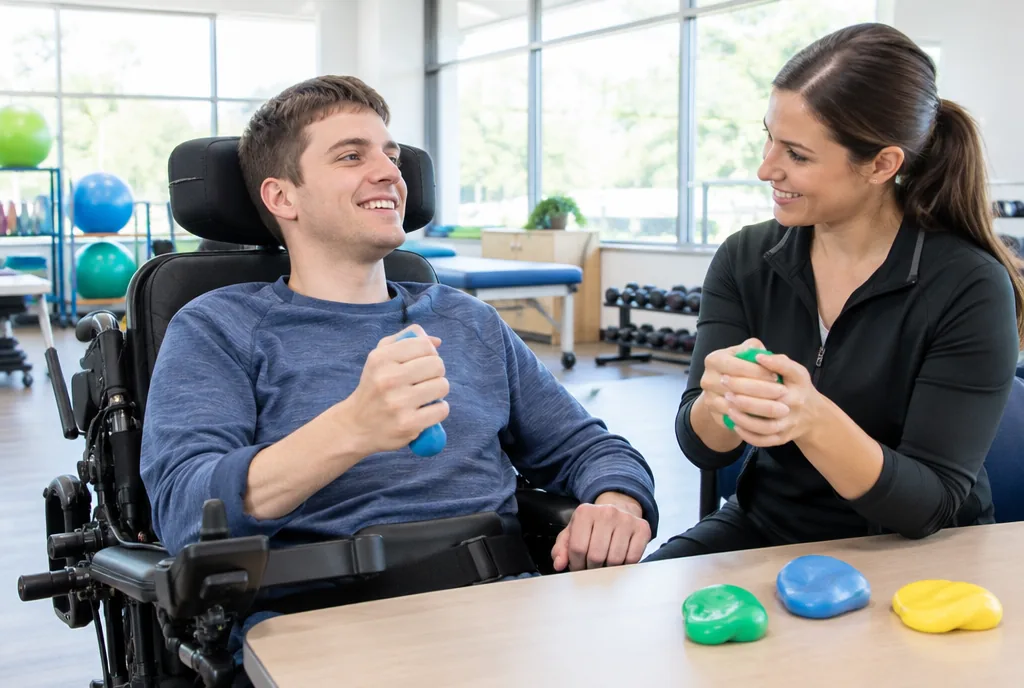
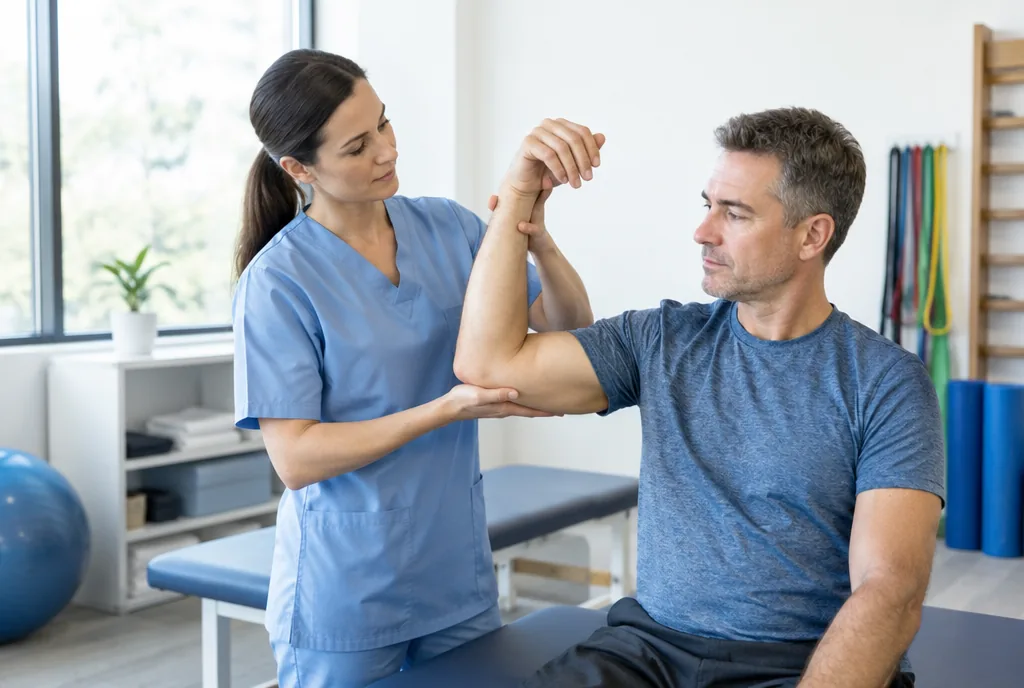
The rehabilitation team includes physiatrists, nurses, physical and occupational therapists, psychologists and social workers. Physical therapy trains strength, balance and – in incomplete injuries – walking. Occupational therapy covers dressing, personal care, cooking and work. Patients learn to manage their bladder and bowel program and protect their skin. A suitable wheelchair, adapted car controls and changes to the home make independence possible.
Functional electrical stimulation (FES) uses small electrical pulses to activate paralyzed muscles, for example on an exercise bike. Epidural spinal cord stimulation has helped some people in studies to move or stand again; it is still being researched and is not a standard treatment. Claims of a cure – for example through stem cell clinics abroad – should be viewed critically.
Prevention
- Wear a seat belt on every trip and use the right child car seat.
- Enter unknown or shallow water feet first; never dive into above-ground pools.
- Prevent falls: handrails, good lighting, no loose rugs, safe ladders.
- Wear a helmet for motorcycling, cycling, skiing and horseback riding.
- Store firearms unloaded and locked.
Frequently Asked Questions
What determines the effects of a spinal cord injury?
The level of the injury and whether it is complete or incomplete. The higher the injury, the more functions are affected; in incomplete injuries, some movement or feeling remains below the injury.
What is the difference between tetraplegia and paraplegia?
Tetraplegia results from an injury in the neck and affects arms and legs. Paraplegia results from an injury lower down and affects the trunk and legs, while the arms keep working.
What is autonomic dysreflexia?
A sudden, dangerous rise in blood pressure in people with injuries at T6 or above, triggered by a stimulus below the injury such as a full bladder. It needs immediate action and medical help.
Can a spinal cord injury be cured?
There is no cure yet. Early treatment, rehabilitation and assistive technology can improve function and independence; methods such as epidural stimulation are still being studied.